How to qualify for low-income housing with SSI
Read on for step-by-step eligibility tips and where to apply in the U.S. Navigating low-income housing can feel overwhelming when you rely on SSI benefits, but there are clear options and programs that can help you secure a safe, affordable home. Start by contacting your local housing authority for guidance — they can explain waiting lists, preferences, and next steps.
Low-income housing programs — including public housing and the Housing Choice Voucher (Section 8) program — are designed to provide affordable housing and rental assistance to people who need it most. When combined with SSI, these programs can offer a real path to housing stability and increased security. This guide explains how SSI interacts with common programs, what documentation you’ll need, and practical steps to improve your chances of getting a voucher or a public housing unit.
Understanding SSI and Low-Income Housing Programs
Supplemental Security Income (SSI) and low-income housing programs both aim to help vulnerable individuals, but knowing how they intersect will improve your chances when you apply. SSI is a federal cash benefit for people who are aged (65+), blind, or have a qualifying disability and who have limited income and resources.
What is Supplemental Security Income (SSI)?
SSI provides monthly cash to help cover basic needs such as food, clothing, and shelter. Eligibility depends on your income, countable resources, and disability or age status; SSI is different from SSDI (Social Security Disability Insurance), which is based on work history. If you’re unsure which program you receive, check your SSA award letter or call the Social Security Administration.
Types of Low-Income Housing Programs in the United States
In the U.S., several common housing programs provide housing assistance and affordable housing options:
- Housing Choice Voucher (Section 8) — federal vouchers that help pay rent in private-market apartments through your local housing authority (PHA).
- Public housing — properties owned and managed by local public housing authorities for low-income families, seniors, and people with disabilities.
- Project-based rental assistance and subsidized housing — rent subsidies tied to specific properties run by PHAs, state housing agencies, or nonprofits.
- Supportive housing and case-management programs — targeted services for people with disabilities or other needs that combine affordable housing with on-site or linked supports.
How SSI Benefits Affect Housing Eligibility
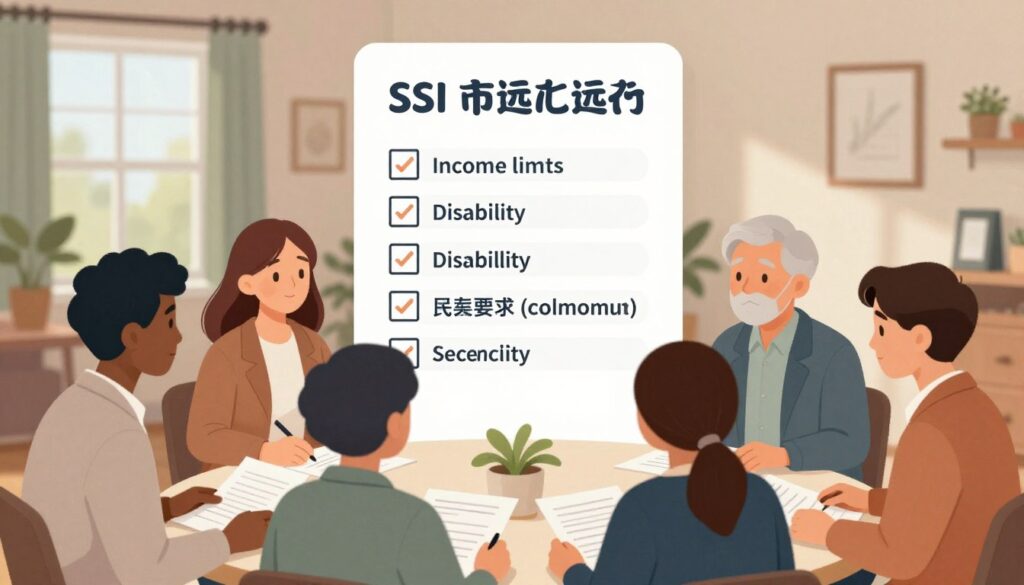
For most U.S. housing programs, SSI benefits count as part of your household income. That means your monthly SSI payment is used when housing authorities calculate whether you meet the program’s income limits (often defined as a percentage of the area median income). Some programs or local PHAs apply deductions or count income differently, so always ask your local housing authority how they treat SSI.
How to Qualify for Low-Income Housing with SSI
SSI recipients seeking low-income housing need to meet specific eligibility criteria used by local housing authorities and HUD-funded programs. Understanding how programs count income, what limits apply, and which documents to provide will improve your chance of qualifying for a voucher or public housing unit.
Income Requirements and Calculations
Most low-income housing programs compare your household income to a percentage of the area median income (AMI), set by HUD for your county or metropolitan area. Common thresholds: very low income (≤30% of AMI), low income (≤50% of AMI), and moderate income (≤80% of AMI). For example, if the AMI for your area is $60,000, 50% of AMI is $30,000 — households earning under $30,000 would generally meet a 50% AMI income limit. Housing Choice Voucher (Section 8) and public housing programs typically target households at or below 50% AMI, with some preferences or set-asides for extremely low-income households and people with disabilities.
Asset Limitations for SSI Recipients
SSI rules limit countable resources for benefit eligibility; commonly referenced limits are $2,000 for individuals and $3,000 for couples. These limits matter for SSI payments, which in turn affect how your household income is calculated for housing programs. Note: some items are exempt from countable resources under SSA rules (for example, one vehicle used for work or medical transportation, certain living expenses, and some home-related items). Always check current SSA guidance for details on what is countable vs exempt.
| Asset TypeIndividual LimitCouple Limit | ||
| Cash / Bank accounts | $2,000 | $3,000 |
| Stocks and bonds | $2,000 | $3,000 |
| Other countable resources | $2,000 | $3,000 |
Tip: Even if your non-SSI income is very low, a large one-time deposit or asset sale could temporarily push you over SSI resource limits and affect benefit eligibility — plan ahead and consult SSA or a benefits counselor if you expect a windfall.
Documentation Needed to Prove Eligibility
Prepare a packet of documents to submit with your housing application. Typical items requested by local housing authorities include:
- SSA award letter or Benefit Verification Letter showing your monthly SSI payment;
- Photo ID (driver’s license, state ID);
- Social Security number or proof of application;
- Proof of household composition (birth certificates, marriage certificate);
- Proof of income and assets (bank statements, award letters, statements of other benefits);
- Medical or disability documentation if applying for disability preference or reasonable accommodation; and
- Proof of current address or residency (lease, utility bills).
Housing authorities may also ask for additional verification (pay stubs, tax returns, landlord references). Submit clean, legible copies and keep originals for your records. If you need help preparing paperwork, contact your local housing authority or a community legal aid agency for assistance.

Navigating the Application Process Successfully
To navigate the low-income housing application process with SSI benefits, be organized and persistent. Below are clear steps and practical tips to help you apply, follow up, and get the right housing assistance for your situation.
- Gather key documents. Get an SSA Benefit Verification Letter (proof of SSI), photo ID, Social Security card, proof of household composition (birth certificates), bank statements, and any medical or disability documentation if you plan to ask for a disability preference or reasonable accommodation.
- Find your local housing authority (PHA). Contact your local public housing authority to learn about available programs — Housing Choice Vouchers (Section 8), public housing, and state or local housing programs. PHAs manage waiting lists, preferences, and application forms.
- Check income and AMI rules. Ask the PHA how they calculate income and which income limits apply in your area (often tied to the area median income). Knowing this helps you pick the best program to apply for.
- Apply correctly and completely. Submit applications online, by mail, or in person as instructed. Fill out forms fully, attach legible copies of documents, and keep a dated copy for your records.
- Follow up and track your application. Note application dates, reference numbers, and PHA contacts. Wait times vary widely — some PHAs have long waiting lists. Call or email periodically (and keep a log of contacts).
What to do if you’re on a waiting list: ask the PHA about interim help and community resources. Local nonprofits, emergency rental assistance programs, or supportive housing services with case management can help while you wait. If you have a disability, request a reasonable accommodation in writing to speed access to priority or accessible units.
Practical tips:
- Use clear subject lines and a short script when contacting the PHA (e.g., “Application follow-up — [Your Name], DOB, application #”).
- Ask whether the PHA offers preferences for people with disabilities, veterans, or low-income families.
- Keep copies of all correspondence and request written confirmation of any promises or deadlines.
If you need help with paperwork or appeals, reach out to a local legal aid organization or your state housing agency for free assistance. These services can guide you through applying for vouchers, public housing, or other rental assistance, and help protect your rights throughout the process.