SSI payment amount
Navigating Supplemental Security Income (SSI) and figuring out the benefit amount you may receive can feel overwhelming. This guide explains the basics of SSI so you can quickly see how income, resources, and eligibility rules affect your SSI payment amount.
Although some parts of this article note rules that apply to U.S. citizens living abroad, the information is written for readers in the United States. If you are outside the U.S., including Colombia, check the Social Security Administration pages linked below or contact SSA for country-specific rules.
What you’ll learn: who qualifies for SSI, how income and countable resources affect benefit amount, where to check your payments, and practical tips to protect and maximize your benefits.
Quick example: a single eligible adult with no other income may receive near the maximum SSI payment amount (subject to current SSA rates and any applicable state supplements) to help cover basic needs like food and shelter.
Ready to check your specific SSI payments? Create or sign in to your my Social Security account at ssa.gov or call the Social Security Administration for personalized help.
Understanding SSI Payment Basics
Knowing the basics of SSI payments helps you understand who can get benefits and how much they might receive. Supplemental Security Income (SSI) is a federal cash program administered by the Social Security Administration that supports people with limited income and resources who are aged, blind, or have a qualifying disability.
What is Supplemental Security Income (SSI)?
SSI provides monthly cash payments to help meet basic needs like food, clothing, and shelter. Unlike Social Security Retirement or Social Security Disability Insurance (SSDI), SSI is need-based and uses income and resource tests rather than work credits. The Social Security Administration determines eligibility and issues payments; some states add a small state supplement to the federal SSI payment.

Eligibility Requirements for SSI Benefits
To receive SSI benefits you must meet these core tests:
- Income limits: You must have limited income. Income includes wages, pensions, and unearned income. The SSA counts “countable income” after exclusions (for example, the first $20 of most income is excluded and parts of earned income are excluded under earned income rules).
- Resource limits: Your countable resources—cash, bank accounts, stocks, and some assets—must be below the SSA limits (commonly $2,000 for an individual; verify current amounts on SSA.gov).
- Disability, blindness, or age: You must be blind, have a qualifying disability, or be age 65 or older. Disability rules apply at any working age if the medical criteria are met.
- Citizenship or immigration status: Generally, you must be a U.S. citizen or national, or meet certain qualifying alien categories.
- Residency: You must reside in the United States, a U.S. territory, or an eligible location (some international rules apply—check SSA guidance).
Meeting these tests is essential to get SSI payments. The application asks for medical and financial documentation so the SSA can calculate your countable income and resources accurately.
Quick definitions and how income is counted
Plain-language definitions to watch for when SSA calculates benefits:
- Countable income: The amount left after allowable exclusions. For example, SSA often allows a $20 general income exclusion, and parts of earned income are excluded under earned income rules.
- Earned income: Wages from work. Portions may be excluded so they do not fully reduce your SSI benefit.
- Resources: Cash, bank accounts, stocks, and some real property. Certain items—like a primary home and some personal effects—are not counted.
Example: how countable income affects your benefit
Example: If you have $600 a month in wages and $100 in unearned income, SSA first applies exclusions (for instance a $20 general exclusion and earned income exclusions). After exclusions, the remaining countable income reduces your SSI payment dollar-for-dollar. This is why understanding earned income exclusions matters — it can preserve more of your monthly cash benefit.
If you want to check precise rules, the Social Security Administration explains countable income and earned income exclusions with worksheets and examples on its website.
Need help? When you apply or report changes, bring pay stubs, bank statements, and documents about any assets—these speed up the SSA review and improve accuracy in calculating your SSI payment amount.
How to Check Your Current SSI Payment Amount
To keep track of your SSI benefits and confirm the exact monthly payment you receive, use official Social Security channels. The Social Security Administration provides several ways to check your SSI payment amount — choose the one that fits your comfort level and access.
Creating and Using Your my Social Security Account
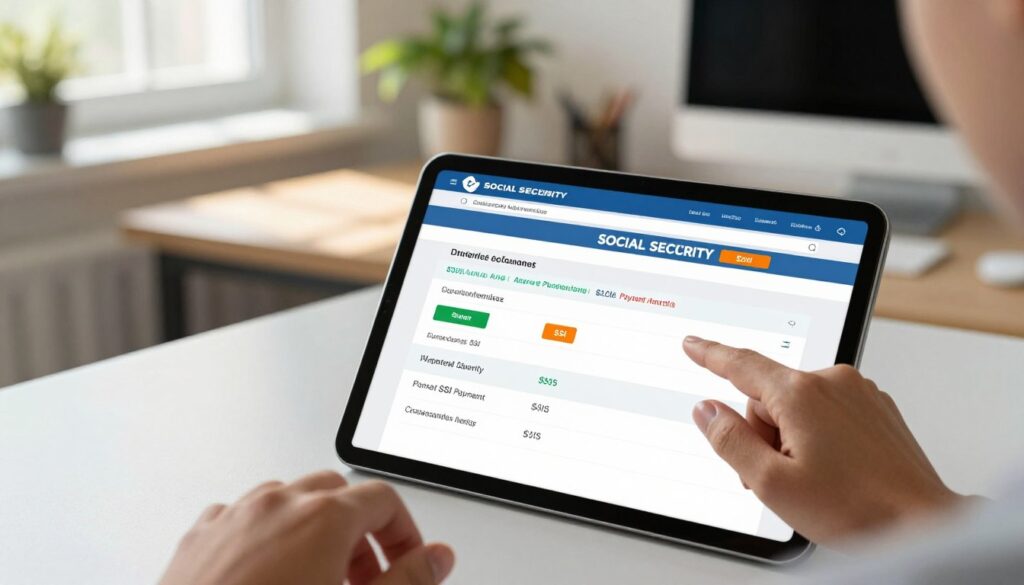
The fastest way to view your SSI payments is to create a my Social Security account at ssa.gov. Steps to get started: 1) go to ssa.gov and select “Sign In/Up,” 2) verify your identity with the required documents (for example, name, SSN, and personal info), and 3) once logged in, go to your benefit details to see the current payment amount and payment date. Your account shows recent payments, upcoming payment dates, and whether any state supplement applies to your monthly SSI.
Tip: my Social Security displays the payment amount and the date it was sent; it’s a secure way to check payments without waiting on mail or visiting an office.
Alternative Methods: Phone, Mail, and In-Person Options
If you can’t or prefer not to use the online account, try these alternatives:
- Phone: Call the Social Security Administration. Be prepared to verify your identity. Phone help can give you the payment amount and the date it was issued.
- In person: Visit your local Social Security office with ID and recent financial documents. An SSA representative can pull up your SSI payment history and explain any changes.
- Mail: You can request written confirmation by mail, though response times are slower. Include identifying information and a clear request to speed processing.
| MethodConvenience LevelResponse Time | ||
| my Social Security Account | High | Immediate |
| Phone | Medium | Same Day/Next Business Day |
| In-Person | Medium | Same Day (may require appointment) |
| Low | Several Days–Weeks |
Troubleshooting and documentation
If you have trouble creating an account or accessing payment details, call SSA and ask for assistance; bring or have available proof of identity (Social Security number, photo ID), recent pay stubs, and bank statements. If an account cannot be set up online, an in-person visit or phone call can often resolve verification issues.
Example: Your my Social Security page may show “Payment for March: $XXX — deposited March 3.” That line tells you the exact monthly SSI payment and the date it was sent. Remember that SSI payments are monthly, but exact dates can vary by recipient.
Special considerations for recipients living outside the United States
Generally, SSI is intended for people who live in the United States; payments to people living abroad are limited and governed by specific SSA rules. If you live outside the U.S. (for example, in Colombia), you should check SSA guidance on international payments — some countries are exceptions under narrow conditions. Contact the Social Security Administration or your nearest U.S. embassy/consulate for precise instructions on payment delivery and account management while overseas.
Ready to check now? Create your my Social Security account at ssa.gov or call the Social Security Administration for help getting your SSI payment details.
Maximizing Your SSI Benefits
To get the most from Supplemental Security Income (SSI), be proactive: know the rules that affect your monthly SSI, report changes promptly, and use available tools to track your benefits. A my Social Security account lets you view payment history, update personal information, and monitor the SSI payment amount so you avoid surprises.
Here are three practical steps to help maximize your SSI benefits and reduce the risk of overpayments or denials:
- Report income and changes quickly: Report wages, other income, living arrangements, or changes in resources to the Social Security Administration as soon as they happen. Timely reporting preserves eligibility and prevents overpayments that you may have to repay.
- Understand countable income and resource rules: Learn which portions of your earnings are excluded (earned income exclusions) and how the SSA calculates countable income. Monitoring your resources (cash, bank balances, stocks) keeps you under the limits that affect eligibility and the amount of your monthly SSI.
- Explore additional government assistance carefully: SSI recipients often qualify for other programs like SNAP (food assistance) or Medicaid (in the U.S.). These programs can help with food and shelter costs but rules vary by state, and some benefits are not available if you live outside the United States. Check with the Social Security Administration and your state agencies to see what you qualify for.
Example: if you earn wages, SSA may exclude part of your earned income before calculating countable income; that exclusion can increase the SSI payment you actually get compared with treating the full gross wages as countable income.
Other tips:
- Keep copies of pay stubs, bank statements, and documentation of assets—these speed SSA reviews and support accurate benefit calculations.
- If you receive SSDI or other Social Security benefits, know how those payments interact with SSI; SSI is need-based and will be reduced by certain other benefit amounts.
- If you think you should qualify for more assistance, contact SSA to review your case or apply for state supplements that increase the maximum SSI benefit in some states.
If you live abroad, remember that many programs (especially Medicaid and state supplements) are U.S.-only. Contact the Social Security Administration or your nearest U.S. embassy/consulate to confirm which benefits you can access while overseas.
Next steps: Sign in or create your my Social Security account at ssa.gov to review your SSI payment amount, check for possible state supplements, and find links to relevant program pages (SNAP, Medicaid). If you need personalized help, call the Social Security Administration or visit a local SSA office.